
Protect service and showroom access
Vehicle movement and customer access shape how materials reach the roof. We confirm service-bay hours, delivery doors, customer entrances, and the route that can carry tools without crossing active work areas. If a repair sits above a showroom or parts counter, the building contact can identify finishes and equipment that need protection. We agree on a staging area and work window before mobilization. A schedule change is called out when it affects a bay or customer route, not left for the service manager to discover at opening.
A dealership roof can include separate sections over sales, service, and storage uses. We identify which assembly covers the reported leak and where roof sections meet. A curb, exhaust penetration, skylight, or wall termination can be the weak point even when the roof field looks intact. We check the details around it and mark the likely water route. If the building also has warehouse-style parts storage, a warehouse roof inspection may address different access and material-handling limits than the customer-facing showroom.
Connect roof details to the interior report
A ceiling mark near a lift or office does not place the roof opening directly above it. A seam or deck joint can carry water away from its entry point before a ceiling finish shows the damage. We compare the report with seams, drain bowls, wall edges, equipment curbs, and any earlier patches. A loose edge, open lap, puncture, or blocked drain calls for a different repair. Photos show the details we checked and the point where the repair boundary starts. If the water path continues beyond that limit, we explain what a larger inspection would need to establish.
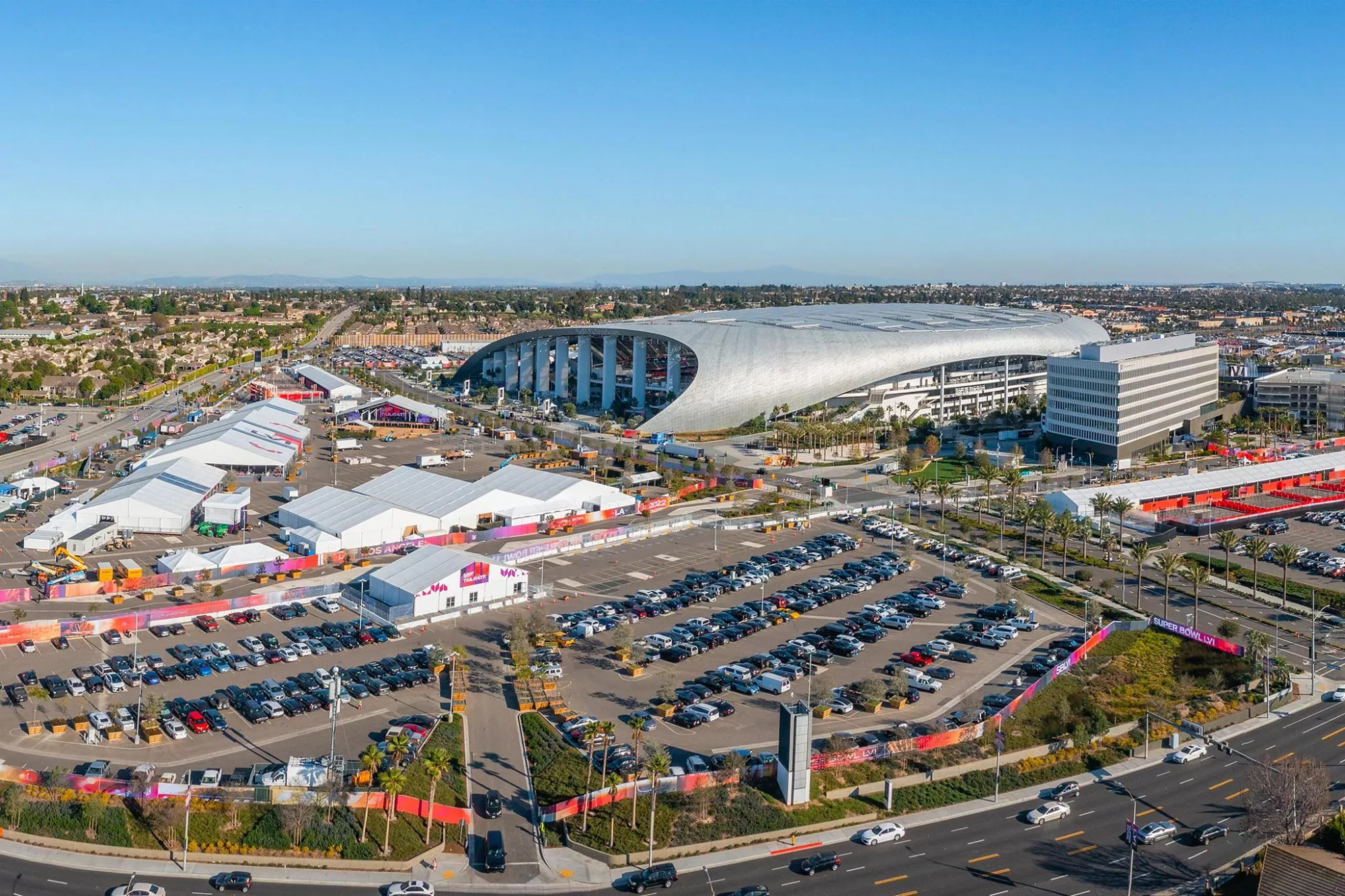
Inglewood includes commercial and industrial areas near Century Boulevard and Prairie Avenue, including Inglewood International Business Park. These settings help orient the work, while the address, actual building use, and roof assembly determine access and scope. For a property near Century Boulevard, we confirm the delivery route and roof access with the site contact before setting the work window. Our commercial inspection records what the roof actually shows.
Set the limit around sound material
A repair holds only when its edge connects to material that can support it. We check the membrane around the defect, remove loose patch material where needed, and prepare the surface for a compatible repair. At a rooftop unit, exhaust, or parapet, we inspect the flashing and its connection to the field. A bead of sealant may cover a gap without correcting the detail beneath it. We show the owner whether the roof supports a local patch or whether the repair should include a larger flashing area.
Cost and timing depend on roof access, the system, wet insulation, penetrations, and whether service operations need to stop below the work. If the repair spans a bay or customer route, we note the protection and staging requirement. Repeated failures or widespread moisture can make a recover or replacement more practical than another patch. A flashing-failure repair differs from a membrane seam correction. We identify the problem before choosing a method, then record what remains outside the repair. For a larger service complex, a flex-industrial roof scope may account for mixed production and office areas.
Match the repair to the roof
We identify the existing roof family before recommending a repair. Metal panels call for checks at laps and fasteners, while a single-ply field needs a sound seam and clean bond area. Bituminous assemblies and coatings each bring other preparation needs. The repair material depends on that assembly and the condition around it. If a previous patch hides the substrate, we explain whether a small opening is needed to verify it. A coating is considered only when the surface can accept it and underlying moisture is addressed.
For a dealership that remains open, the work sequence should protect the roof while keeping customer and service areas usable. We can separate a leak repair from a later replacement plan, provided each step leaves the assembly closed and sound. A standing-seam metal system and a TPO membrane have different attachment and seam details. We explain the material choice and the maintenance point that deserves attention at the next inspection, rather than assuming a single system fits every building.
Give the manager a clear closeout
The closeout should tell the service manager what changed on the roof and what should be watched. We provide photos of the repaired detail, identify the boundary, and note any adjacent condition that was not part of the work. If an area remains concealed, we list the limitation and the practical next check. That record can be matched with a future interior report without repeating the full investigation. For a property with additions, we label roof sections separately.
Before an alteration or reroof, we coordinate the scope with Inglewood staff handling plan review and inspection. At a property near the Crenshaw/Imperial district or Century Boulevard, we verify the entrance and staging area with the site contact before setting a schedule. Nearby Gardena roof service likewise starts with city and site access confirmation. A condition report can organize findings across multiple buildings or phases. If a sudden leak threatens vehicles or inventory, emergency roof response can address active entry while the permanent scope is prepared.
Related Roofing Work